
Principles, Calibration, Analytical Techniques and Practical Laboratory Applications
Analytical instruments play a critical role in pharmaceutical quality control and analytical research and development. A pharmaceutical analyst must understand not only how to operate an instrument but also the scientific principles behind its operation, calibration, performance verification and analytical results.
During technical interviews, candidates are often asked questions about UV-Visible spectroscopy, FTIR, polarimetry and Karl Fischer titration. These questions may appear fundamental, but answering them accurately requires a clear understanding of analytical chemistry and instrumentation.
The following questions cover important pharmaceutical analytical instrument concepts, with explanations, equations, examples and practical laboratory considerations.
1. WHAT IS THE PRINCIPLE OF UV-VISIBLE SPECTROSCOPY?
UV-Visible spectroscopy is an analytical technique based on the absorption of ultraviolet and visible radiation by molecules. When UV or visible radiation passes through an analyte solution, molecules absorb radiation at specific wavelengths corresponding to the energy difference between their electronic energy levels.

This absorption causes electronic transitions from lower-energy molecular orbitals to higher-energy molecular orbitals. The commonly encountered electronic transitions include:
- σ → σ*
- n → σ*
- π → π*
- n → π*
The wavelength at which maximum absorption occurs is represented as λmax.
How does it work?
When a molecule absorbs radiation, an electron moves from a lower-energy orbital to a higher-energy orbital. The energy required for this transition depends on the molecular structure and the electronic environment (Conjugation).
For example:
- Conjugated systems generally absorb at longer wavelengths because conjugation reduces the energy difference between relevant electronic states.
- Compounds containing chromophores absorb radiation in characteristic wavelength regions.
- Auxochromes can influence the absorption wavelength and intensity.
Pharmaceutical Applications
- Quantitative estimation of pharmaceutical substances.
- Identification and characterization of certain compounds.
- Determination of impurities.
- Dissolution testing.
- Assay of pharmaceutical formulations.
- Monitoring chemical reactions.
Important interview point: UV-Visible spectroscopy primarily involves electronic transitions. It should not be confused with IR spectroscopy, which primarily involves molecular vibrational transitions.
2. WHAT IS BEER-LAMBERT’S LAW? EXPLAIN.
Beer-Lambert’s law is a fundamental principle of quantitative UV-Visible spectroscopy.
It combines two independent relationships: Beer’s law and Lambert’s law.
A. Beer’s Law
Beer’s law states that when monochromatic radiation passes through homogeneous solutions under constant path-length conditions, the absorbance is directly proportional to the concentration of the absorbing species.
In simple terms, as the concentration of the absorbing substance increases, its absorbance increases proportionally, within the applicable linear range.
B. Lambert’s Law
Lambert’s law states that when monochromatic radiation passes through a homogeneous absorbing medium at constant concentration, the absorbance is directly proportional to the optical path length.
In simple terms, increasing the distance travelled by light through the absorbing solution increases the absorbance.
C. Beer-Lambert’s Law
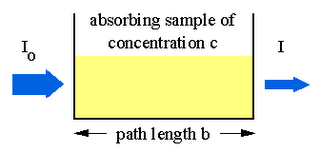
A parallel beam of monochromatic radiation passing through homogeneous solutions then the absorbance is proportional to concentration and path length of the solution.
A œ Ct
A = ε ct (This is known as Beer lamberts law)
A is Absorbance,
C is concentration, t is thickness and
ε is molar extinction coefficient.
Important interview point: Beer-Lambert’s law is applicable under suitable experimental conditions. Deviations may occur because of high concentrations, chemical interactions, polychromatic radiation, stray light and instrumental limitations.
3. WHAT IS STRAY LIGHT? HOW DO WE DETERMINE THE LIMIT OF STRAY LIGHT IN UV-VISIBLE SPECTROPHOTOMETER?
Definition
Stray light is unwanted radiation reaching the detector that is outside the selected wavelength band.
It may originate from:
- Imperfections in optical components.
- Reflections and scattering within the instrument.
- Monochromator limitations.
- Grating imperfections.
- Unwanted radiation entering the optical system.
Stray light is an important instrumental error because it can produce falsely low absorbance readings, particularly when measuring highly absorbing solutions.
Principle of Stray-Light Testing
Stray light is commonly evaluated using suitable cut-off filters or solutions. A cut-off material absorbs radiation below or above a specified wavelength range while transmitting radiation beyond its cut-off region.
At a wavelength where the test solution should strongly absorb radiation, the detector should receive very little transmitted light. If unwanted radiation reaches the detector, the instrument may show an apparent transmittance and lower absorbance.
Commonly Used Materials
The following are examples of cut-off materials used in UV spectrophotometer stray-light testing. Their applicability and concentrations depend on the relevant pharmacopoeial procedure.
| Material | Approximate cut-off wavelength | Typical solution |
|---|---|---|
| Sodium nitrite (NaNO₂) | 390 nm | 5% aqueous |
| Potassium iodide (KI) | 260 nm | 1% aqueous |
| Sodium iodide (NaI) | 260 nm | 1% aqueous |
| Lithium carbonate (Li₂CO₃) | 227 nm | Saturated aqueous |
| Sodium chloride (NaCl) | 205 nm | 1% aqueous |
| Potassium chloride (KCl) | 200 nm | 1.2% aqueous |
Stray-Light Test Using Potassium Chloride
A commonly used test employs a 1.2% potassium chloride solution. At 200 nm, potassium chloride acts as a suitable cut-off material.
The test solution should show sufficiently high absorbance at the specified wavelength.
A commonly cited acceptance criterion is: Absorbance >2.0 for a 1 cm optical path length at 200 nm, against water as reference, where this criterion is specified by the applicable procedure.
Relationship Between Absorbance and Transmittance
A = log10 100 / %T (or) A = 2 – log10 %T
If absorbance is greater than 2, transmittance is less than 1%.
Interpretation
a) If we get absorbance of 1.2% KCl solution more than 2 (Transmittance less than 1.0%) then there is no stray light.
b) If we get absorbance of 1.2% KCl solution less than 2 (Transmittance more than 1.0%) then that transmitted light is known as Stray light.
Important interview point: An absorbance value greater than 2 does not establish that stray light is completely absent. It establishes compliance with the specified test criterion.
4. WHICH PARAMETERS ARE CHECKED DURING UV-VISIBLE SPECTROPHOTOMETER CALIBRATION?
UV-Visible spectrophotometer performance is evaluated through different tests to ensure wavelength accuracy, photometric accuracy and optical performance.
The applicable pharmacopoeial requirements and instrument qualification procedures should determine the actual tests and acceptance limits.
Important Calibration and Performance Verification Parameters
1. Control of wavelength by HOLMIUM PERCHLORATE SOLUTON (Holmium oxide in perchloric acid)
2. Control of absorbance by POTASSIUM DICHROMATE (In 0.005M sulphuric acid)
3. Limit of stray light by POTASSIUM CHLORIDE SOLUTION (In water)
4. Wavelength accuracy
5. Resolution by TOLUENE IN n-HEXANE.
6. Resolution power by TOLUENE IN METHANOL.
7. Absorption of corvettes (Cuvettes).
A. Why Do We Use Holmium Oxide for Wavelength Accuracy?
Holmium oxide has several characteristic and well-defined absorption bands across the UV-Visible region. These absorption peaks occur at established wavelengths (At 241.15nm,287.15nm,361.5nm,536.3nm) and can be used as reference points to evaluate the wavelength accuracy of the instrument.
Holmium oxide is available in different certified reference formats, including suitable solutions and glass filters. And it is suggested by NIST (National Institute of Standards and Technology) and Pharmacopeia.
Important: The reference peak values and acceptance limits depend on the reference material, solvent, path length and applicable procedure. They should not be treated as one universal set of values.
B. Why Do We Use Potassium Dichromate for Photometric Accuracy?
Potassium dichromate is commonly used for evaluating photometric accuracy because it provides characteristic absorbance values at several wavelengths (At 235nm, 257nm, 313nm, 350nm, 430nm) in the UV region.
It is generally prepared in specified concentrations using dilute sulphuric acid. The absorbance is measured at specified wavelengths and compared with pharmacopoeial or certified reference values.
Its advantages include:
- Availability in high-purity form.
- Good stability under appropriate storage conditions.
- Well-established reference absorbance values.
- Suitability for evaluating photometric accuracy over several UV wavelengths.
C. Why Do We Use Potassium Chloride for Stray-Light Testing?
Potassium chloride solution has a characteristic UV cut-off around 200 nm.
At the specified test wavelength, it provides a suitable way to evaluate unwanted radiation reaching the detector. So it is neutral for UV-VIS region. Means It cannot absorb in UV-VIS region.
D. Why Do We Use Toluene in Hexane for Spectral Resolution Testing?
Toluene in hexane is used to assess the spectral resolution capability of a UV spectrophotometer.
Toluene produces characteristic absorption maxima at 269nm and minima at 266nm in the UV region. These two are very close to each other if any small change in the resolution we can easily identify the absorbance differences. Hexane cannot absorb uv light and it is miscible with Toluene.
E. Why Do We Use Polystyrene Film?
Polystyrene film is commonly used for FTIR wavelength or wavenumber accuracy verification.
It is discussed separately in the following IR spectroscopy questions.
Important interview point: Instrument calibration and performance verification are related but not identical. Calibration establishes a relationship with recognized reference values, while performance verification demonstrates that the instrument meets specified requirements.
5. WHAT IS THE PRINCIPLE OF IR SPECTROSCOPY?
Infrared spectroscopy is an analytical technique based on the absorption of infrared radiation by molecules.
When infrared radiation passes through a sample, molecules absorb energy at frequencies corresponding to their vibrational transitions. Based on changes in vibration & rotational movements of the atoms present in the sample we can determine functional groups present in the sample.

These vibrations involve changes in bond lengths and bond angles.
Types of Molecular Vibrations
There are two major categories.
A. Stretching Vibrations
These involve changes in bond lengths.
They are further classified into:
- Symmetric stretching.
- Asymmetric stretching.
B. Bending Vibrations
These involve changes in bond angles.
They include:
- Scissoring.
- Rocking.
- Wagging.
- Twisting.
Pharmaceutical Applications
- Identification of pharmaceutical substances.
- Functional group identification.
- Raw material characterization.
- Detection of certain impurities.
- Compatibility studies.
- Polymorphic form characterization, where appropriate.
Important interview point: IR spectroscopy primarily measures molecular vibrational transitions. Rotational transitions may accompany vibrational transitions, particularly in gas-phase spectra, but routine pharmaceutical IR identification focuses mainly on vibrational absorption bands.
6. WHY DO WE USE KBr FOR PELLET PREPARATION IN IR SPECTROSCOPY?
Potassium bromide (KBr) is commonly used for preparing solid sample pellets in conventional transmission IR spectroscopy.
Reasons for Using KBr
1. Infrared Transparency
KBr has good infrared transparency across much of the commonly used mid-IR region. Therefore, it contributes relatively little absorption in the region used for many pharmaceutical identification tests.
2. Pellet Formation
Due to its high mechanical strength, KBr can be compressed under suitable pressure to form a transparent or translucent pellet. This provides a suitable medium for dispersing the sample.
3. Chemical Compatibility
KBr is generally compatible with many pharmaceutical samples under suitable preparation conditions. However, compatibility must be assessed because not every sample is suitable for this technique.
4. Low Background Interference
When properly dried and handled, KBr produces relatively low background interference in the relevant spectral region.
Other Materials
Depending on the sample and spectral region, other alkali halides such as sodium chloride and potassium iodide may also be used.
Important precautions:
- KBr is hygroscopic and absorbs moisture from the atmosphere. Moisture can produce unwanted absorption bands. KBr should be properly dried and stored.
- Excessive sample concentration may produce poor-quality spectra.
- The sample should be uniformly dispersed in the KBr matrix.
Important interview point: KBr is used primarily because of its infrared transparency and ability to form suitable pellets, not simply because it is chemically neutral.
7. WHAT IS THE THICKNESS OF POLYSTYRENE FILM USED FOR FTIR CALIBRATION?
Polystyrene film is a commonly used reference material for verifying the wavenumber accuracy of FTIR instruments.
A commonly encountered thickness is: 38µ (0.038mm=0.04mm)
Other thicknesses, such as approximately 76 µm, are also available. The selection depends on the reference material and the applicable verification procedure.
Why Is Film Thickness Important?
The film should provide suitable absorption bands with sufficient intensity and appropriate spectral characteristics. The reference bands are compared against established wavenumber values to evaluate the instrument’s performance.
Important interview point: There is no universal requirement that every FTIR instrument must use exactly 38 µm polystyrene film. Use the thickness and certified reference values specified in the applicable procedure.
8. WHAT ARE THE UNITS OF WAVENUMBER IN FTIR?
The unit of wavenumber used in conventional FTIR spectroscopy is: cm-1
It is pronounced as reciprocal centimetre or inverse centimetre.
9. WHY DO WE USE POLYSTYRENE FILM FOR FTIR CALIBRATION?
Polystyrene film is widely used as a reference material for evaluating FTIR wavenumber accuracy.

Reasons for Using Polystyrene
1. Characteristic Absorption Bands
Polystyrene produces several characteristic IR absorption bands across the mid-IR region. These bands are useful as reference points for verifying wavenumber accuracy.
2. Well-Established Reference Values
The positions of characteristic absorption bands are established and can be compared with certified or specified reference values.
3. Suitable Physical Properties
Polystyrene film is available in reproducible thicknesses and is convenient for routine instrument performance verification. So it’s having highly durability and stabled at any temperature.
Common Reference Bands
Depending on the certified reference material and applicable procedure, characteristic polystyrene bands include regions around:
- 3060 cm⁻¹.
- 2849 cm⁻¹.
- 1944 cm⁻¹.
- 1601 cm⁻¹.
- 1583 cm⁻¹.
- 1154 cm⁻¹.
- 1028 cm⁻¹.
- 906 cm⁻¹.
- 698 cm⁻¹.
The actual reference values should be taken from the certificate supplied with the reference film or the applicable pharmacopoeial procedure.
Important interview point: Polystyrene is used because it provides reproducible, well-characterized absorption bands, not because it has absorption bands at every point in the IR region.
10. WHAT ARE THE ADVANTAGES OF FTIR OVER DISPERSIVE IR SPECTROSCOPY?
FTIR offers several important advantages over conventional dispersive infrared spectroscopy.
The major advantages are explained below.
1. Speed
In FTIR, information from a broad spectral region is collected simultaneously through an interferometer. This makes spectrum acquisition considerably faster in seconds than conventional dispersive scanning methods in minutes.
2. Sensitivity and Signal-to-Noise Ratio
FTIR generally offers improved signal-to-noise performance. The signal-to-noise ratio can be improved by increasing the number of scans.
This means that increasing the number of scans improves signal-to-noise ratio, but not in direct proportion to the number of scans.
3. High Optical Throughput
FTIR instruments can provide high optical throughput because they do not require the same narrow entrance and exit slits used in conventional dispersive systems.
This is commonly associated with the Jacquinot advantage.
4. Mechanical Simplicity
An FTIR spectrometer generally uses an interferometer containing a moving mirror. The optical system has fewer moving components than many conventional dispersive arrangements. This can contribute to improved mechanical reliability.
5. Internal Wavenumber Reference
Most conventional FTIR instruments use a helium-neon laser as an internal reference for monitoring the movement of the interferometer mirror. This provides an accurate internal reference for wavenumber determination. However, this does not eliminate the need for periodic instrument performance verification.
6. Improved Reproducibility
The combination of rapid data acquisition, internal reference measurement and Fourier transformation provides highly reproducible spectra when the instrument is properly maintained and operated.
Summary
| Parameter | FTIR | Dispersive IR |
|---|---|---|
| Data acquisition | Simultaneous spectral information | Sequential wavelength scanning |
| Speed | Generally faster | Generally slower |
| Signal-to-noise | Generally better | Generally lower |
| Optical throughput | High | Comparatively lower |
| Internal reference | Commonly uses a laser reference | Depends on instrument design |
| Mechanical arrangement | Interferometer | Dispersive optical system |
Important interview point: FTIR offers significant advantages in speed, optical throughput and signal-to-noise ratio, but it still requires appropriate calibration, maintenance and performance verification.
11. WHAT IS THE PRINCIPLE OF A POLARIMETER?
A polarimeter is an analytical instrument used to measure the optical rotation produced by optically active substances.

Principle
When plane-polarized light passes through an optically active substance, the plane of polarization rotates through a certain angle. This rotation is called optical rotation.
The direction of rotation is classified as:
Dextrorotatory (+):
The substance rotates plane-polarized light clockwise when viewed according to the conventional direction of observation.
Levorotatory (−):
The substance rotates plane-polarized light anticlockwise under the same convention.
Example
If an optically active substance rotates the plane of polarized light towards the right, it is described as dextrorotatory (+). If it rotates towards the left, it is described as levorotatory (−).
Pharmaceutical Applications
- Identification of optically active substances.
- Determination of specific optical rotation.
- Purity assessment in suitable applications.
- Analysis of sugars and other chiral compounds.
- Monitoring changes in optical activity.
Important interview point: Dextrorotatory (+) and levorotatory (−) describe the direction of optical rotation. They must not be confused with D and L configuration, which describes relative stereochemical configuration.
12. WHAT IS THE DIFFERENCE BETWEEN OPTICAL ROTATION AND SPECIFIC OPTICAL ROTATION?
These are two important parameters in polarimetric analysis.
A. Optical Rotation (α)
Optical rotation is the actual angle through which the plane of polarized light rotates when it passes through an optically active sample.
It is measured directly using a polarimeter. Its value depends on several experimental conditions, including concentration, path length, wavelength and temperature.
B. Specific Optical Rotation ([α])
Specific optical rotation is the standardized optical rotation expressed for a specified wavelength, temperature, path length and concentration convention.
For a solution when concentration is expressed in g/100 mL:
[α] = 100α /cl
Where:
- [α] = Specific optical rotation.
- α = Observed optical rotation in degrees.
- l = Cell length in decimetres. (1dm=10 cm=100 mm)
- c = Concentration in g/100 mL.
Comparison
| Parameter | Optical Rotation | Specific Optical Rotation |
|---|---|---|
| Symbol | α | [α] |
| Meaning | Actual measured rotation | Rotation under standardized conditions |
| Measurement | Directly measured | Calculated from measured rotation |
| Concentration dependence | Yes | Corrected for concentration |
| Path-length dependence | Yes | Corrected for path length |
Important interview point: Specific rotation is not completely independent of all experimental conditions. It depends on wavelength, temperature, solvent and chemical state of the sample.
13. ON WHICH FACTORS DO OPTICAL ROTATION AND SPECIFIC OPTICAL ROTATION DEPEND?
A. Factors Affecting Observed Optical Rotation
Observed optical rotation depends on:
- Nature and stereochemical composition of the substance.
- Concentration of the optically active substance.
- Length of the sample tube.
- Wavelength of the light source.
- Temperature of the sample.
- Nature of the solvent.
- Chemical composition and equilibrium state of the sample.
B. Factors Affecting Specific Optical Rotation
Specific optical rotation depends on:
- Nature and stereochemical composition of the substance.
- Wavelength of the light source.
- Temperature.
- Solvent used.
- Chemical state and equilibrium conditions of the sample.
Under identical measurement conditions, specific rotation is normalized for concentration and path length.
Important Explanation
Suppose the same optically active substance is measured at two different concentrations using the same solvent, temperature and wavelength.
The observed optical rotation will generally change with concentration.
However, after applying the specific rotation calculation, the results should be comparable if the solution behaves ideally and no concentration-dependent chemical or physical changes occur.
Important interview point: Specific rotation is not universally constant at all concentrations. Association, dissociation, solvent interactions and chemical equilibria may cause concentration-dependent changes.
14. WHY DO WE USE SUCROSE FOR POLARIMETER CALIBRATION? WHAT IS MUTAROTATION?
A. Why Is Sucrose Used?
Sucrose is a commonly used optically active reference substance in polarimetric applications.
Its important characteristics include:
- It has well-established specific optical rotation values under defined conditions.
- It is available in suitable high-purity grades.
- It dissolves readily in water.
- It does not undergo mutarotation like reducing sugars such as glucose.
- It is suitable for preparing reference solutions under controlled conditions.
Because sucrose is a non-reducing disaccharide, its glycosidic linkage prevents the free anomeric interconversion responsible for mutarotation.
Important distinction: Sucrose is useful as a reference material, but polarimeter verification may also use certified quartz control plates or other certified reference materials, depending on the instrument and procedure.
B. What Is Mutarotation?
Mutarotation is the change in optical rotation of a sugar solution with time due to the interconversion of its alpha and beta anomeric forms through an open-chain intermediate.
Example: D-Glucose
D (+)-Glucose exists in two isomeric forms which undergo mutarotation.
a) Crystals of ordinary D(+)-Glucose of melting point 146°C are dissolved in water the specific rotation gradually drops from an initial +112 to +52.7.
b) Crystals of ordinary D(+)-Glucose of melting point 150°C (obtained by crystallization at temp 98°C) are dissolved in water the specific rotation gradually rises from an initial +19 to +52.7.
The form with higher positive rotation is called Alpha D (+)-Glucose. And with lower positive rotation is called Beta D (+)-Glucose .The change in the specific rotation of each of these is known as Mutarotation.

Important Interview Point
Sucrose does not exhibit mutarotation under normal aqueous conditions because both anomeric centres are involved in its glycosidic linkage.
Glucose exhibits mutarotation because its free anomeric carbon allows interconversion between alpha and beta forms.
15. WHAT IS THE PRINCIPLE OF KARL FISCHER TITRATION?
Karl Fischer titration is a specific chemical method used for the quantitative determination of water in pharmaceutical substances and other materials.
It is based on the reaction of water with iodine and sulphur dioxide in the presence of a suitable alcohol and base.
Principle
In Karl Fischer titration, water reacts quantitatively with iodine and sulphur dioxide under suitable reaction conditions.
The overall stoichiometric relationship is:
I2 + H2O —> 2HI
This means one mole of iodine reacts with one mole of water.
ROH + SO2 +R’N -> [R’NH] SO3R + H2O + I2+ 2R’N -> 2[R’NH] I + [R’NH] SO4R
Mechanism:
Step 1: 3R’N+ SO2 + I2 + H2O -> [R’N] SO3 + 2[R’NH] I
Step 2: [R’N] SO3 + ROH -> [R’NH] SO4R {R’N = Pyridine}
Main Reagents
A conventional Karl Fischer reagent system contains:
- Iodine.
- Sulphur dioxide.
- Alcohol, commonly methanol.
- A suitable base, such as imidazole or historically pyridine.
Two Types of Karl Fischer Titration
A. Volumetric Karl Fischer Titration
In volumetric KF titration, a reagent of known water equivalence is added to the sample until the endpoint is reached. The water content is calculated from the volume of KF reagent consumed and its standardized factor.
B. Coulometric Karl Fischer Titration
In coulometric KF titration, iodine is generated electrochemically inside the titration cell. The quantity of electricity required to generate iodine is used to calculate the amount of water.
Pharmaceutical Applications
- Water determination in APIs.
- Water determination in excipients.
- Residual water analysis.
- Moisture determination in raw materials.
- Water determination in solvents and finished products.
Important interview point: Karl Fischer titration specifically measures water, provided the sample and matrix do not interfere with the KF reaction. The method must be selected according to the sample’s chemical characteristics.
16. WHY DO WE USE DISODIUM TARTRATE DIHYDRATE (DST) FOR KF REAGENT STANDARDIZATION AND KF APPARATUS PERFORMANCE VERIFICATION?
First, it is important to distinguish between standardization of Karl Fischer reagent and verification of the Karl Fischer instrument.
A. Standardization of Karl Fischer Reagent
Standardization means determining the actual water equivalence or titre of the Karl Fischer reagent. For example, a volumetric KF reagent may have a nominal titre of approximately 5 mg water/mL. However, its actual titre must be established experimentally. A suitable water standard is required for this purpose.
Requirements of a Suitable Water Standard
- It should have a known water content.
- Its water content should be stable under specified storage conditions.
- It should be suitable for the KF reaction.
- It should have appropriate purity and traceability.
- It should be compatible with the selected volumetric or coulometric method.
Commonly Used Standards
1. Water
High-purity water or a certified water standard can be used for appropriate KF standardization procedures.
2. Disodium Tartrate Dihydrate (DST)
Its theoretical water content is approximately: 15.66%. DST is widely used as a water standard for volumetric KF applications.
Generally we use
Water – 100% of water (For volumetric)
Disodium Tartrate Dihydrate – 15.66% of water (For volumetric)
Lactose Mono hydrate – 5.0% of water (For Coulometric)
B. KF Instrument Performance Verification
The instrument should be evaluated to ensure that its measurement system performs satisfactorily.
Depending on the instrument and procedure, verification may include:
- Titrant delivery performance.
- Endpoint detection.
- Blank determination.
- Water recovery.
- Repeatability.
- Accuracy using a suitable certified water standard.
- Coulometric current and charge measurement performance, where applicable.
Important Difference
| Parameter | Reagent Standardization | Instrument Performance Verification |
|---|---|---|
| Purpose | Establish reagent titre | Verify instrument measurement performance |
| Main focus | Water equivalence of reagent | Overall analytical system |
| Common reference | DST or suitable water standard | Certified water standard |
| Result | mg water/mL reagent | Recovery, accuracy, precision or other defined criteria |
Important interview point: Standardization of KF reagent is not equivalent to calibration or complete performance qualification of the KF instrument. Both are necessary where required by the analytical procedure and instrument control strategy.
17. Why Is Excess Methanol Used?
Methanol is generally used in sufficient quantity to maintain a suitable reaction medium and ensure effective interaction between the sample, water and KF reagents.
The reaction in KF titration is
3 Im +I2 + SO2 + H2O ——> 2 Im. HI + Im.SO3
Im.SO3 + CH3OH ——–> Im.(H)SO4CH3.
(Stochiometri of I2 & H2O is 1:1)
In the 2nd step if methanol is not present the reaction is like below.
3 Im + I2 + SO2 + H2O ——> 2 Im. HI + Im.SO3 (Im= Imidazole)
Im.SO3 + H2O ——–> Im.NH + SO4H
(Stochiometri of I2 & H2O is change from1:1 to 2:1)
During the titration, If Excess methanol is not present Im.SO3 can react with H2O which varies the Stochiometri of H2O & I2 from 1:1 to 2:1.
It also helps dissolve many organic substances and provides a homogeneous reaction environment.
Important interview correction: It is not scientifically correct to state that the iodine-to-water stoichiometry automatically changes from 1:1 to 2:1 simply because methanol is absent. The reaction chemistry is more complex and depends on the alcohol, base, solvent system and reagent formulation.
18. WHY ARE IPA OR PYRIDINE-BASED SYSTEMS USED IN PLACE OF METHANOL FOR WATER DETERMINATION IN CARBONYL COMPOUNDS?
This question is related to chemical interference during Karl Fischer titration.
Certain aldehydes and ketones may react with methanol under acidic conditions to form acetals or ketals.
These reactions may generate water. If additional water is produced during the KF analysis, the instrument may measure both the original sample water and the water formed through side reactions.
This can result in falsely high water content.

This means side reaction takes place.
If we use any secondary alcohol (less reactive than Primary alcohol) like IPA in place of Methanol we can easily stop the side reaction (Acetal or ketals with water formation) means IPA only reacts with water but not with carbonyl compounds.
We use this reaction for determination of water. But in above case water is produced in the reaction which leads to a wrong assumption.
Pyridine also used in place of methanol.
Note:
1. We have the only choices of Alcohol (Primary, secondary & tertiary) and Basic buffers (like pyridine & Imidazole).Because karl fischer reagent is miscible with these two.
2. Tertiary alcohol is very less reactive so it is not suitable. So the remaining choices are Primary & secondary alcohols and pyridine & Imidazole.
Important Interview Point
The correct approach is to select a methanol-free or otherwise suitable KF reagent system specifically validated for the carbonyl-containing sample.
The objective is to eliminate or control side reactions that may generate or consume water and interfere with the actual water determination.
19. WHY DO WE USE SILICONE OIL IN MELTING RANGE (MR) APPARATUS?
Silicone oil is commonly used as a heat-transfer medium in conventional liquid-bath melting range apparatus.
Principle
The melting range apparatus gradually increases the temperature of the sample while the analyst observes the melting behaviour. A suitable heating medium is required to transfer heat uniformly to the sample-containing capillary.
Why Is Silicone Oil Used?
1. Good Heat-Transfer Properties
Silicone oil provides relatively uniform heat transfer, helping maintain consistent heating conditions.
2. Thermal Stability
Suitable grades of silicone oil remain stable over a broad operating temperature range.
3. Low Volatility
Silicone oil generally has relatively low vapour pressure compared with many conventional organic heat-transfer liquids.
This reduces evaporation during normal operation.
4. Suitable Temperature Range
Different grades of silicone oil are available for different operating temperatures.
5. Electrical Insulating Properties
Silicone oil is electrically insulating, although this is not the principal reason for its use as a heating bath medium.
Important Precautions
- Select the silicone oil grade according to the instrument’s operating temperature.
- Avoid contamination of the oil bath.
- Monitor the oil condition and replace it when necessary.
- Follow the instrument manufacturer’s recommendations.
- Do not assume that all silicone oils are non-toxic, non-flammable or environmentally harmless.
Important Interview Point
The primary purpose of silicone oil in conventional melting range apparatus is to provide a suitable, thermally stable and relatively uniform heat-transfer medium.
Modern melting point instruments may use electronic heating blocks and may not require a silicone oil bath.
CONCLUSION
Understanding analytical instruments is not limited to memorizing operating procedures or calibration frequencies.
A competent pharmaceutical analytical professional should understand:
- The scientific principle behind each analytical technique.
- The purpose of each reagent and reference material.
- The relationship between instrument parameters and analytical results.
- The factors that may affect accuracy and precision.
- The significance of calibration and performance verification.
- The limitations of each analytical technique.
In pharmaceutical laboratories, an analyst must be able to explain not only what is being done but also why it is being done.
Technical knowledge becomes professional expertise when you understand the science behind the procedure, recognize its limitations and can defend the reliability of the analytical result.